Urgent Need
Unreached people groups
Over 3 billion people still live without access to the Gospel. This isn’t fate — it’s simply unaddressed. Together, we can change that story.
What is an unreached people group?
An unreached people group (UPG) is an ethnic group without a community of believing Christians large enough, and with enough resources, to share the Gospel with the rest of the group without outside help. Missiologists commonly define it as a group that is less than 2% evangelical Christian — and in many groups the number is effectively zero.
These are not simply people who live near a church and have not yet believed. They have no access to a church, a Bible in their language, or a believer who can explain the Good News.
Where are they?
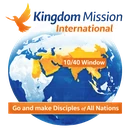
Most of the world’s unreached peoples live in the 10/40 Window — the region of North Africa, the Middle East and Asia between 10° and 40° north of the equator. In the nations KMI serves:
- Thailand: many hill-tribe and border communities remain unreached.
- Pakistan: numerous ethnic groups have little or no Christian witness — including the Kalash people of Chitral.
- Myanmar: remote groups are cut off by conflict and geography.
- Laos: believers in remote areas face restriction and isolation — KMI trains Lao pastors and leaders to reach them.
Why They Remain Unreached
Four barriers to the Gospel
Geographic
Remote mountains, jungles and borderlands that are hard to access.
Political
Governments that restrict religious freedom and missionary access.
Cultural
Strong social pressure against changing religion.
Linguistic
No Scripture or teaching in their heart language.
How KMI reaches them
Indigenous leaders first. We train believers who already share the language and culture to reach their own people — leaders who can go where outsiders cannot. See our leadership training.
Holistic ministry. By meeting real needs — education, relief, livelihoods — we demonstrate the Gospel as we proclaim it. See our community development.
Churches that multiply. Our goal is a self-sustaining church movement in every unreached community we serve. See our church planting.
FAQ
Frequently asked questions
What is the difference between unreached and unsaved?
Unsaved people may have a church nearby but have not yet followed Christ. Unreached people have no realistic access to a church or the Gospel at all.
How many unreached people groups are there?
Estimates vary, but there are thousands of unreached people groups worldwide — most of them in the 10/40 Window.
When is a group considered reached?
When there is a self-sustaining indigenous church able to evangelise the rest of the group — usually above 2% evangelical Christian.
How can I help reach unreached peoples?
Pray, give to train indigenous workers, and help your church engage. Become a partner.
Be part of what God is doing
Give, partner, or come and serve — there is a place for you in the mission across Asia.