Building Appeal · Kalash Valley, Chitral
Build a House of Light Bayte-Noor بیت نور · Kalash Community Learning Centre
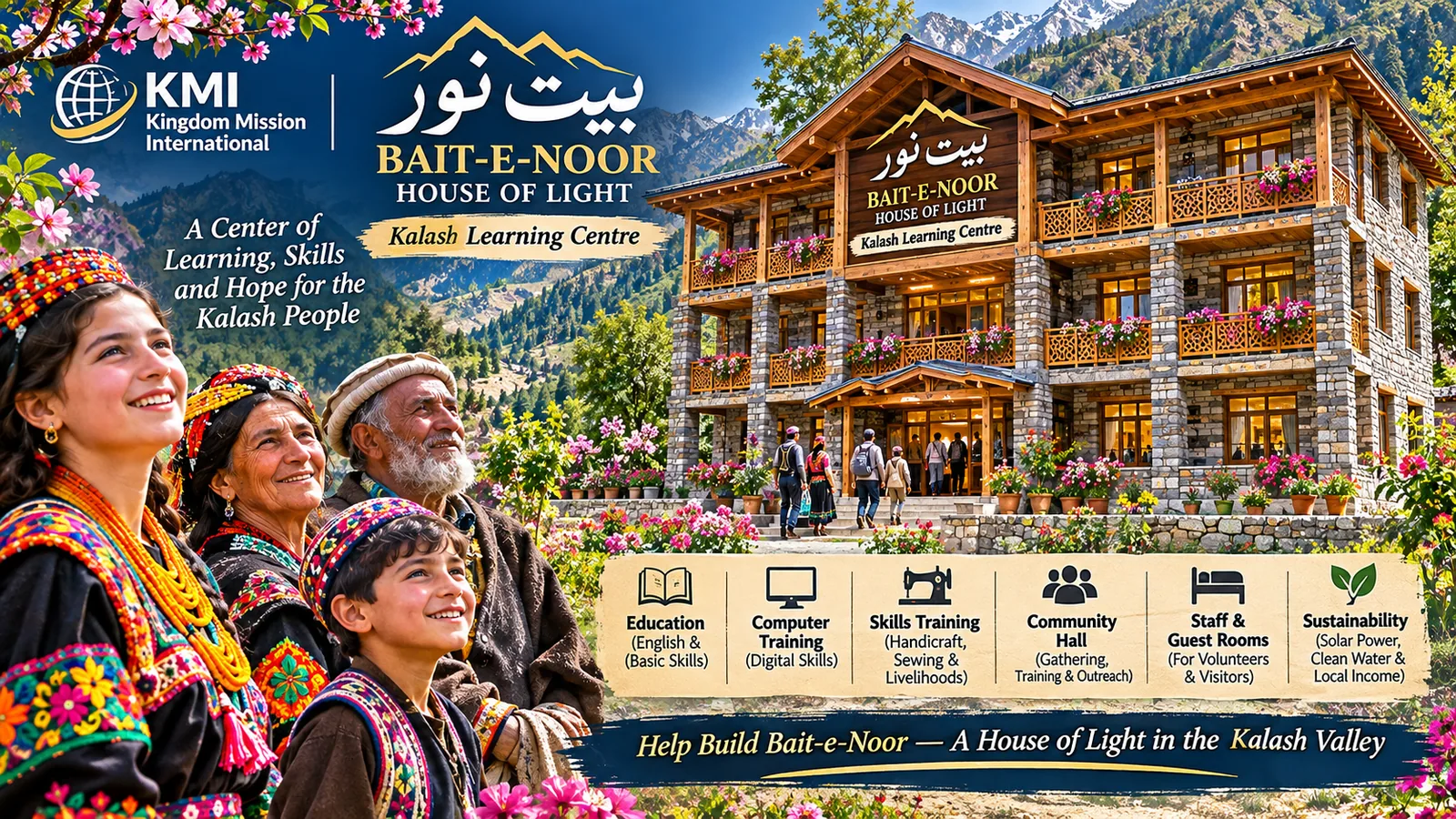
A three-floor centre for education, life skills and community — and a home for the teachers who will live among one of the least-reached peoples on earth. The land is given. The relationships are built. All that remains is to build.
بیت نورHouse of Light — in Urdu, Bayte-Noor — is the name the centre will carry in the valley: a place where the light of learning, hope and the love of Jesus can shine in the Kalash valleys.
The People
An ancient people in the Hindu Kush
Deep in the glacier-fed valleys of Chitral live the Kalash — between 3,500 and 4,000 people, one of the smallest ethnic and religious minorities in South Asia. Their own tradition traces them to the soldiers of Alexander the Great; genetic studies show they are distinct from every neighbouring people. Their language, Kalasha-mun, is one of the oldest living Indo-Iranian languages — and has never had a standard written form.
Kalash women wear the black embroidered cheo and the cowrie-shell kupu headdress every day, and three great festivals — Chilam Joshi, Uchau and Chaumos — shape the year. It is a culture of extraordinary beauty. And the Kalash remain a 100% unreached people: no known community of Kalash followers of Jesus exists anywhere in the world.
The Need
A people under pressure
The Kalash face a combination of threats that could see their community and culture disappear within two or three generations.
Poverty
No local industry, limited farm income and scarce jobs leave families economically vulnerable — the main driver of a shrinking community.
Education gap
Local schools are poorly resourced and teach in Urdu, leaving Kalash children without the tools to compete.
A language at risk
Kalasha-mun is oral only. As young people switch to Urdu and Pashto, a whole heritage could vanish with today’s elders.
Health care far away
The nearest hospitals are hours away by mountain road; maternal and infant mortality are high.
Climate change
Retreating glaciers threaten the irrigation channels that sustain Kalash farming and food security.
No Gospel witness
Every year another generation grows up without ever hearing the name of Jesus.
How It Began
Born in prayer, confirmed by open doors
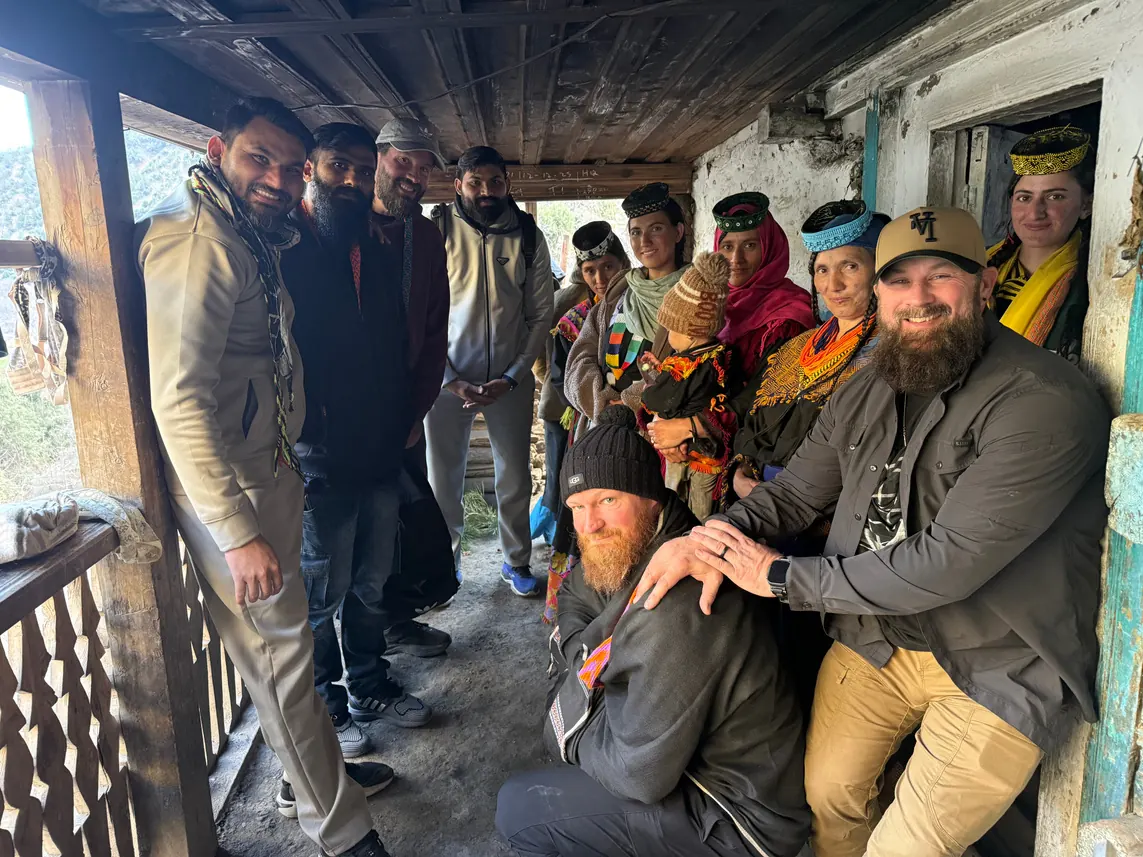
This project was not born in a planning meeting. Evangelist Eliot Morgan, serving in partnership with KMI, received a clear call from God to go to “the blue-eyed people of Pakistan” — before he even knew their name. He prepared by studying their history and culture and praying over their valleys from thousands of miles away.
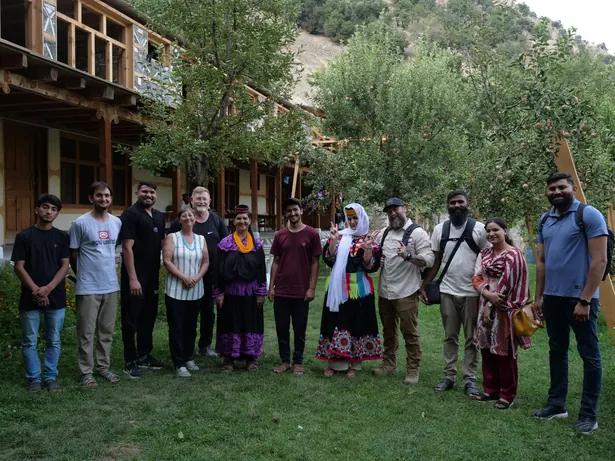
On the first visit, a young Kalash guide welcomed the team into her family’s home to share a meal. On the second, the team met a respected Kalash woman Eliot had seen in a documentary before leaving home — a meeting only God could arrange. Then local community members donated land for the Centre: in a region where land is fiercely guarded, a remarkable sign of trust.
“We are praying for wisdom and an open door of favour to build long-lasting relationships with this completely unreached tribe, that we may bring them the Gospel.”— Evangelist Eliot Morgan, Kalash Valley
Inside the House of Light
Every room has a purpose
Education by day, community in the evenings, and a home for the people who serve. Select the image to explore every room up close.

Residence & leadership
- Director’s accommodation (private room, study and bath)
- Director’s study and office
- Teachers’ accommodation
- Guest room for volunteers and visitors
Education & skills training
- English classroom (English and basic literacy)
- Computer lab (10+ computers)
- Life-skills training room (sewing, handicraft, baking)
- Business & entrepreneurship room
- Library & resource room
Community & outreach
- Gathering and discipleship hall (training, worship, community events)
- Reception & administration
- Kitchen & dining
- Health & wellbeing room (basic care, nutrition, health education)
- Bathrooms & facilities
The Building
A centre that belongs in the valley
Built to serve, not to impress: local stone and timber, carved Kalash geometric patterns and a welcoming, communal scale, so the community can say, “This belongs here. This is ours.”
- 1Rooftop solar array — 10 kW panels with battery bank for energy independence
- 2Carved timber gable with the Bayte-Noor sign
- 33rd floor — residence & leadership: Director’s rooms, teachers’ and guest rooms
- 42nd floor — education & skills: English, computer lab, life skills, business and library
- 51st floor — community & outreach: discipleship hall, reception, kitchen, health room
- 6Main entrance with carved timber doors, porch and steps
- 7Clean-water system — stream connection with filtration
- 8Security fence and gate — a safe, welcoming perimeter
- 9Outdoor gathering and play space for children and community events
- 10Carved balconies with flower boxes — local stone and timber, insulated for mountain winters
Floor Plan
Three floors, one purpose
Community and outreach on the 1st (ground) floor, education and skills on the 2nd, and a home for the team on the 3rd. Select any room to see what it will hold.
Concept layout, not to scale. On small screens, swipe the plan sideways.
Energy & water
- 10 kW solar with battery bank and inverter
- Backup generator for cloudy seasons
- Filtered stream water or harvested rainwater
Built for the mountains
- Local stone, timber and concrete
- Insulated, weatherproofed roof
- Bathrooms on every floor
Safe & welcoming
- Security fence, boundary wall and gate
- Outdoor gathering and play space
- Kitchen and dining for shared meals
Programmes
What will happen inside
English school
Three levels (beginner to advanced), six days a week in two daily shifts, for children, young adults and working adults. Story-based learning, including Bible narratives.
Computer & digital skills
A six-month foundation course plus a three-month advanced module, with a certificate recognised by employers in Chitral.
Business & handicrafts
Financial literacy, cooperatives, pricing and online selling of Kalash crafts — with traditional embroidery taught by a respected Kalash craftswoman as a paid partner.
Hospitality & tourism
A 12-week certificate so Kalash people can run their own guesthouses and tours instead of working for outsiders.
Health & wellbeing
Maternal and child health, first aid, hygiene and nutrition, and a quarterly medical outreach camp.
Community Hall
Bible-story and film evenings, women’s fellowship, youth nights and shared celebrations — where trust grows into friendship and faith is explored freely.
Transparent Budget
Where every dollar goes
The full budget is $102,800, including a contingency reserve, against a US$100,000 appeal. Select a category to see each line item.
Construction & civil works$36,00035%
- Main building: foundations, walls, roof (local stone, wood, concrete)$22,000
- Roof insulation and weatherproofing for mountain winters$3,000
- Interior plastering, concrete flooring, tiled wet areas$4,000
- Doors, windows and shutters$3,500
- Security fencing, boundary wall and entrance gate$2,500
- External pathways, drainage, outdoor gathering space$1,000
Equipment & furnishing$19,70019%
- 10 desktop computers + monitors$8,000
- Projector + screen ×2$1,200
- Printer, scanner, photocopier$600
- Student desks and chairs ×60$2,400
- Whiteboards ×5 + teaching supplies$800
- Bedroom furniture ×3$2,400
- Community Hall furnishing (chairs, tables, AV)$1,800
- Office furniture and equipment$800
- Kitchen equipment and dining items$500
- Backup generator$1,200
Personnel — Year 1$19,50019%
- Centre Director: salary, housing supplement, benefits$7,200
- 2 Christian teachers from Lahore (KMI network), 12 months$8,400
- Local Kalash community liaison / teaching assistant, 12 months$2,400
- Staff relocation, travel and setup$1,500
Utilities & building systems$15,50015%
- Solar power: 10 kW panels + battery bank + inverter$8,000
- Clean water: stream connection + filtration$2,500
- Sanitation on every floor$1,500
- Kitchen construction and plumbing$1,500
- Electrical wiring, sockets and lighting$2,000
Legal, administration & contingency$7,4007%
- NGO registration, legal compliance and permits$800
- Oversight visits ×2 + KMI team travel$1,500
- Audit, financial reporting and accountability$500
- Contingency reserve$4,600
Programmes, materials & ministry$4,7005%
- Curriculum: English, computing, business$1,500
- Film licences and audio Bibles (Urdu, Khowar, Kalasha)$500
- Year 1 books, materials and stationery$800
- Health outreach supplies and first-aid kits$600
- Community events and hospitality$800
- Community craft teacher: materials and stipend$500
Construction estimates are based on Chitral local pricing checked during field visits. The $2,800 above the appeal target is covered by the contingency reserve or partner churches.
Your Gift
See what your gift builds
Choose an amount to see what it provides at the Kalash Centre.
$800 provides a desktop computer for the computer lab.
Give $800 by PayPalAmounts are approximate, based on the project budget. Every gift goes to the House of Light.
Bank transfer (Australia)
Kingdom Mission International (Australia) Inc.
BSB 062-806 · Account 10490456
SWIFT CTBAAU2S
Reference: KALASH
Churches & major donors
Request the full project proposal, or talk with us about funding a room or system.
Contact UsSustainability
Built to stand on its own
A ministry that needs outside money forever is fragile. The Centre is designed to fund itself through tourism services, a Kalash craft-export cooperative and paid courses for non-Kalash professionals.
Percentages show the share of income generated by the community. Projection from the project proposal.
View as table
| Year | Community income | Partner support | Total income | Operating cost | Self-generated |
|---|---|---|---|---|---|
| Year 2 | $4,500 | $30,000 | $34,500 | $35,000 | 13% |
| Year 3 | $15,500 | $24,000 | $39,500 | $34,000 | 39% |
| Year 4 | $23,000 | $15,000 | $38,000 | $33,000 | 61% |
| Year 5 | $31,000 | $10,000 | $41,000 | $32,000 | 76% |
People & Ownership
Kalash-led from the start
Outsiders are catalysts. The goal is a Kalash-led community institution rooted in Jesus Christ.
Centre Director
A mature follower of Christ from Pakistan’s Christian community, fluent in Urdu and committed to at least three years.
Teachers from Lahore
Three to four qualified Christian teachers from KMI’s network, committed for at least two years.
Kalash staff
A community liaison, teaching assistants and a caretaker employed from Year 1, with a Kalash leader in place by Year 3.
Oversight
Eliot Morgan visits at least twice a year; KMI provides accountability, reporting and support.
Timeline
From appeal to opening day
- Now
Preparation
Land paperwork finalised, registration as an educational NGO begun, partner fundraising launched and the search for a Centre Director under way.
- M 1–2
Funding confirmed
Local Chitral builders engaged and materials procured. Community partners formally invited into the project.
- M 3–6
1st floor
Foundations, walls and first floor slab; electrical and plumbing rough-in; solar panels ordered.
- M 7–10
2nd & 3rd floors
Upper floors, roof and all interior finishing; doors and windows; solar and water systems commissioned.
- M 11–12
Fit-out & team
Furniture and equipment installed, computer lab running. The Director and first teachers arrive and begin language learning.
- Sept 2027
Opening day
A community celebration with Kalash elders and families. First students enrol and classes begin.
- Year 2
Full programmes
All four classrooms running, the handicraft online store launched and the first tourism certificate cohort graduated.
- Year 3
Local leaders
Kalash teaching assistants lead sessions; tourism income begins to cover operating costs.
- Year 4–5
75%+ self-funded
Craft exports and tourism providing steady income; Kalash people stepping into leadership.
- Year 7+
Independent
Full financial independence and Kalash-led governance, with KMI as partner for accountability.
Expected Impact
Five years from now
Wise, lawful and respectful
- The Kalash are a constitutionally recognised non-Muslim minority
- Registered as an educational and community-development NGO
- Every programme voluntary and by invitation
- No public preaching or provocative signage
Honouring Kalash identity
The Gospel never requires the Kalash to stop being Kalash. The vision is Kalash followers of Jesus who worship in their own language, celebrate their own heritage and share Christ with their own people. The Centre will also help record Kalash oral tradition and pass on traditional crafts.
FAQ
Frequently asked questions
Is this work legal?
Yes. The Kalash are a constitutionally recognised non-Muslim minority in Pakistan. The Centre will be registered as an educational and community-development NGO, comply fully with Pakistani law, and run every programme on a voluntary, invitation-only basis.
Where will the Centre be built?
In the Kalash valleys (Bumburet, Rumbur and Birir) of Chitral District, Khyber Pakhtunkhwa, on land donated by the local community. The site is construction-ready.
When will it open?
Construction takes about a year once funding is confirmed. The expected opening is September 2027.
How will the Centre keep running after it is built?
Through tourism and hospitality services, a Kalash handicraft export cooperative and paid short courses for non-Kalash professionals. The plan targets about 75% self-generated income by Year 5 and full independence by Year 7.
Who will run it?
A resident Centre Director and Christian teachers recruited through KMI’s network in Lahore, working alongside Kalash staff from Year 1, with leadership transitioning to Kalash people over time.
Can I see the full project proposal?
Yes. The full proposal, with detailed budget and implementation plan, is available to ministry partners on request. Email us.
How are funds accounted for?
Gifts are received by Kingdom Mission International, designated to the Kalash Centre and reported to partners. The budget includes audit and financial-reporting costs. See our accountability page.
The land is given. Will you help build a House of Light?
All that stands between the Kalash people and a permanent, loving witness in their valleys is US$100,000 and the generosity of God’s people.