
Key takeaways
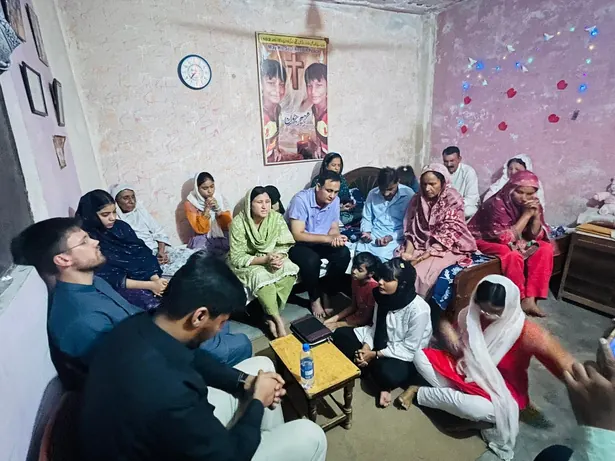
- House churches are small, led by local believers and designed to multiply.
- Indigenous leaders plant best: they know the language, culture and risks.
- Simple, reproducible Bible study lets every disciple make disciples (2 Timothy 2:2).
- Strategies differ by country: open in Thailand, discreet in Laos and parts of Pakistan, adaptive in war-torn Myanmar.
- KMI has planted 263+ churches since 2012 by training indigenous leaders.
Why house churches in Asia?
Across Asia’s least-reached regions, house churches are often the only practical form of church. They need no building or permit, can meet discreetly, and are led by ordinary believers. Above all, they multiply: when a home church trains new leaders, it can start another.
A simple model for planting churches
- Prayer and preparation — local believers pray for a village or neighbourhood.
- Sharing the Gospel through relationships and family networks.
- Discovery Bible study in homes: read, obey, share.
- Raising leaders from within each new group.
- Multiplication — each church starts the next.
Church planting in each country
Thailand: churches can meet openly; planters focus on hill-tribe villages and on Thai Buddhists through relationships, schools and community care. Missions in Thailand.
Laos: registration is hard, so most churches are house churches that multiply through families, especially among the Khmu and Hmong. Missions in Laos.
Myanmar: in conflict areas churches meet in homes, camps and the jungle, with relief and the Gospel going together. Missions in Myanmar.
Pakistan: existing churches are strengthened while new home cells start discreetly, led by trained young leaders. Missions in Pakistan.
Why training indigenous leaders matters
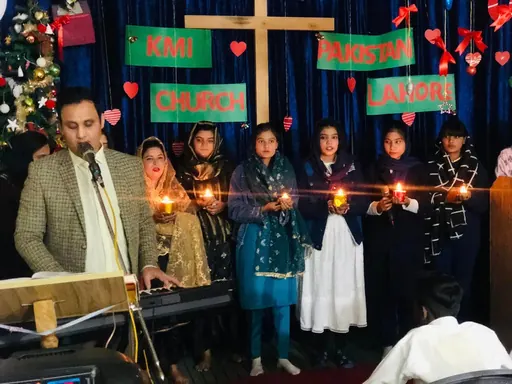
Outsiders can visit; local leaders stay. They speak the heart language, understand the culture and carry the risks with their people. That is why KMI’s strategy is to train indigenous leaders at its hubs in Mae Sai and Lahore, then walk with them as they plant.
How you can support church planting
- Plant a church: in Myanmar about $2,000 supports a church plant for a year. Give.
- Train a leader: sponsor a pastor’s training. Adopt a leader.
- Pray for church planters in restricted nations.
Sources: national censuses (Thailand National Statistical Office; Pakistan Bureau of Statistics, 2023; Myanmar census, 2014; Lao census, 2015), Joshua Project and Kingdom Mission International field reports. Figures are estimates and change over time.